
Are we living in the moment, or are we just documenting it?


What do we miss when we view life through a screen?
By Melina Tzakou, Psychologist—Psychoanalytic/Psychodynamic Psychotherapist, Founder & Scientific Director of the Arkesis Mental Health Center
A moment, a glance, a click. We live in an era where the light of sunset becomes a filter, a dinner with friends is interrupted by the search for the perfect shot, and every experience is mediated by the cell phone and digital media. The cell phone becomes an extension of the hand; our gaze is torn between the joy of the experience and the anxiety of missing anything. The concert, the laughter, the loss, the silence at home—everything passes through a screen and risks becoming merely digital traces, rather than inner memories that etch themselves into the psyche.
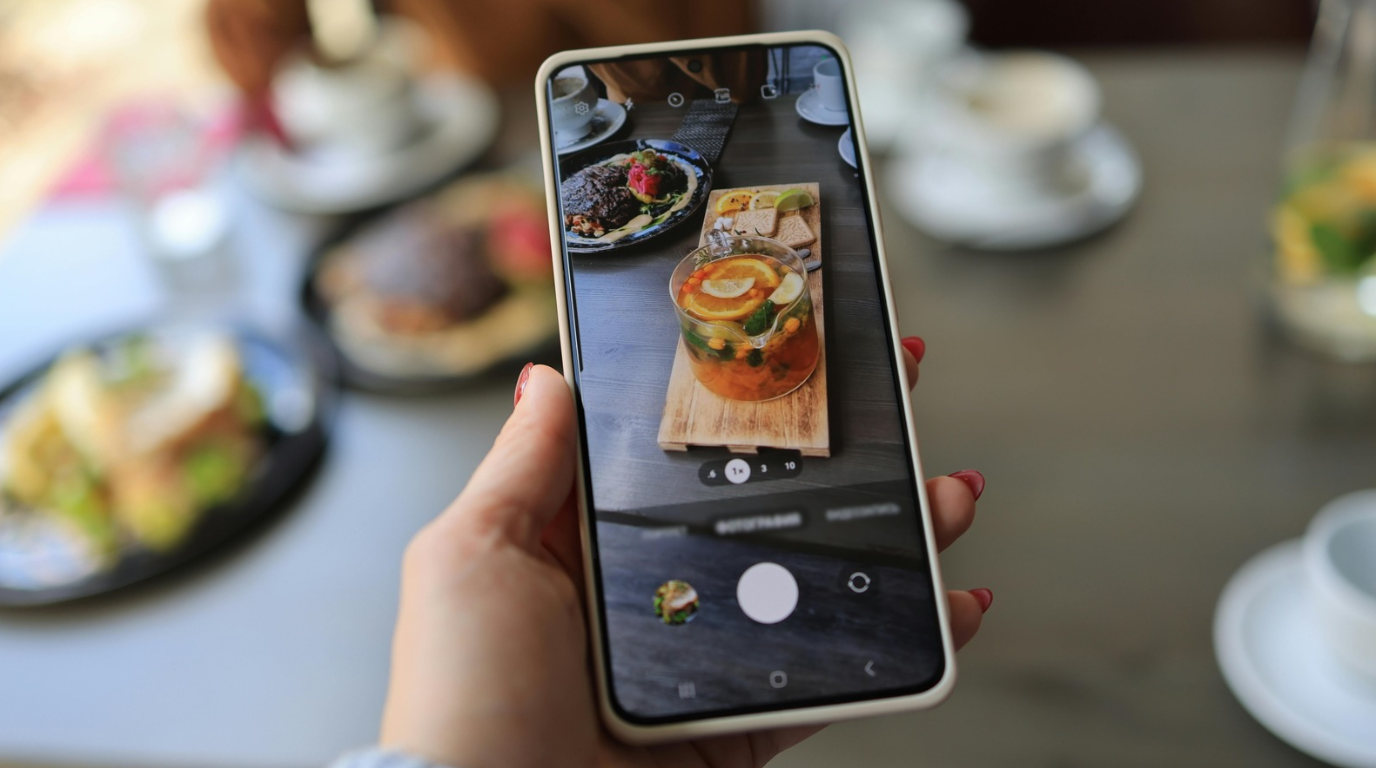
It has become a habit to document a large part of life. We photograph our meals, moments with loved ones, the beautiful scenes of the day—even moments of emotion or mourning are immortalized, as if the cell phone were an extension of human presence.
The psychological question that arises: Does the desire to document serve as a defense against the anxiety of transience? When the soul turns to capturing the moment, does it remain present in the moment, or does it shift to the position of an external observer, adopting the role of a gaze that surveys rather than experiences?
The need to keep a beautiful moment alive is, of course, nothing new. Humans have always sought ways to preserve memory, to hold on to something of what passes and is lost. Years later, a photograph can bring back a face, a place, or a period of life and reawaken emotions that seemed forgotten.
Today, however, memory alone is not enough for many people. Recording has become almost automatic; with the press of a button, a part of what is happening is preserved. The moment passes, but its image remains. It can be saved, viewed again, and shared.
Perhaps this is where one of the human needs hidden behind this excessive recording lies: the difficulty in accepting the transience of experience. According to psychoanalytic theory, the inability to accept transience is linked to the fear of loss and the anxiety of the ephemeral, as Freud describes in his theory of mourning and melancholia (1917). Capturing the moment often serves as a defense against loss—an attempt to control time and alleviate the anxiety caused by the inevitability of decay.
Life bears the mark of the irreversible passage of time, a loss that the unconscious struggles to come to terms with. No record can imprison the flowing present.
A moment comes and goes. It may become a memory or leave a feeling deep inside, but it never repeats itself exactly the same way. Perhaps that is why there is a need to capture, store, and preserve moments. The cell phone camera seems to offer such a possibility.
What happens when the compulsive need to preserve the moment triggers an inner conflict? The soul is torn between the longing for experience and the anxiety of losing all trace of that experience.
At a concert, for example, the magic of the moment may be split between the sound of a favorite artist and glancing at the screen to make sure the video is recording properly. Our attention is divided between what is happening and the effort to keep it alive. There is not only the experience itself; there is also the observer of the moment.
The same is true of the simplest, most everyday moments. A sunset isn’t just enjoyed as a sight; we also look for the right angle to capture it in a photo. A beautiful meal is not merely savored for its taste, but also prompts thoughts on how it will be captured in a photo. Even on a walk, one’s gaze turns inward through the camera lens of a cell phone.
It’s as if there’s a second self watching over life and wondering what it looks like. In psychoanalytic terminology, the “observing ego” is a part of the personality that distances itself from direct experience and adopts the position of an external observer, as described by Winnicott (1965). This internal division may be reinforced by the constant use of technology and recording.
Things become more complicated when recording extends to social media. Then the image is not just for personal use, but is also directed at others. The experience gains an audience. Psychoanalytic theory highlights the deep human need not only to see but also to be seen, to be the object of another’s gaze. As Lacan describes in “The Mirror Stage” (1949), identity is constructed through the gaze of the other. Similarly, John Steiner (“Seeing and Being Seen: Narcissistic Pride and Narcissistic Humiliation,” 1996) analyzes how the gaze of the Other can become a source of affirmation or anxiety, profoundly shaping the psyche and one’s relationship with the self. In the modern era, constant exposure to social media reinforces this process of “seeing and being seen,” as experience gains value and meaning through recognition and reflection in the gaze of others. It is not only important to experience pleasure, but also to show that pleasure. Simply being in a beautiful place is not enough; it also matters that others recognize it.
Not every photograph is necessarily a symptom of an inner void or a need for validation. The phenomenon of constant documentation belongs to the realm of the complex psyche, where the need to share and the desire for symbolic validation are intertwined. However, automatic documentation often reveals the presence of unconscious forces driving behavior.
Is it not sometimes the case that the experience itself is no longer sufficient, but rather the need for a trace of it arises in order to confirm that it actually happened? As Lacan (1964) notes, the trace is a fundamental element in the formation of identity and memory. The search for the trace is linked to the psychoanalytic need for symbolic confirmation of existence and life.
The psychological function of recording may also be linked to our need to control what cannot be controlled. The moment is, by its very nature, unpredictable. We do not know how long it will last, what will follow, or what we will feel within it. We cannot freeze it in time nor decide when it will end. Photography, on the other hand, provides a sense of control. It frames an experience and gives it a specific form. Something that was alive and changing just a few seconds ago becomes a static image—a single frame we can hold onto.
However, the meaning of real life lies precisely in what cannot fit within a single frame. In the emotion born from a beautiful conversation. In the look a loved one gave. In the silence that unites two souls. In the scent of a place, in the sound of a voice, in the feeling of a warm embrace. Even in that fleeting thought that slipped away gently and was never recorded anywhere.
Life is not limited to the imprints of external reality. True wealth stems from the internalization of experiences—the process by which experiences are incorporated into the psyche and become internal objects, shaping one’s identity and inner life. The concept of internalization, first introduced by Sigmund Freud (1923) and further developed by Melanie Klein (1932) and Donald Winnicott (1965), reveals that actual memory and the psychological imprint do not depend on external documentation, but on the depth to which the moment is integrated into the unconscious. Thus, although there are times when hundreds of photographs from a particular period of life are collected, it ultimately remains difficult to relive the true emotions of that time. The images, faces, and places are remembered, but the inner experience is not always captured.
Yet there is a paradox here. The more that is recorded, the more material there is to remember. But memory does not function like a hard drive that stores whatever is fed to it. Memory is a dynamic and often unconscious process, influenced by desires, repressions, and emotional experiences (Freud, 1923). It is a living process, intertwined with emotion and the significance an experience holds in one’s personal history.
It is no coincidence that some of the most significant moments of our lives have no photograph. There are moments that were never recorded and yet remain indelible in our psychological imprint, as if they were deeply etched into the unconscious. There are others that were photographed dozens of times, yet the inner presence was missing; the soul was absent from the experience, as attention had shifted to the gaze of the observer rather than that of the participant.
The issue isn’t about stopping photography or viewing technology as the enemy. It’s enough to allow ourselves, at times, to step away from the screen and be truly present in the moment. To lose ourselves in a song without a second thought about capturing it. To be with someone and truly be present with them. To enjoy the sunset without being consumed by the need for the perfect shot. To savor a lovely meal without feeling obligated to take a photo. There are moments we don’t need to prove to anyone that they happened. We don’t need to share them, save them, or revisit them through a screen. It’s enough that we’ve experienced them within ourselves.
Wednesday, 25 November 2026
Services
At our Center, we offer individual and group psychotherapy services for adults, adolescents, and children, couples therapy, parenting counseling, and specialized psychiatric support.

Individual Psychotherapy for Adults
Through the personal process of individual psychotherapy, clients find a safe space where they can speak openly about whatever is troubling them, gain a better understanding of themselves, and find wa
View more
Individual Psychotherapy for Children and Adolescents
Individual psychotherapy for children and adolescents provides a safe and supportive environment, tailored to the needs and challenges of each age group. Through the therapeutic process, children and
View more
Individual Psychotherapy for the Unemployed, Students, and Vulnerable Groups
Psychotherapy is a truly valuable investment in ourselves. However, we understand that the cost can sometimes be a barrier, especially for those who belong to vulnerable groups.
View moreContact Us
Please contact us to discuss any questions you may have about our services or to schedule an appointment.
Hours
- Mon - Fri 9 am - 9 pm
Accesibility
- We provide easy access for people with disabilities, with wheelchair ramps and appropriately designed entrances and spaces.